Lily’s Garden - Design & Relax
- 4.6
- Rating
- 50.00M
- Installs
- Free
- Price

 Analysis by App-foxy
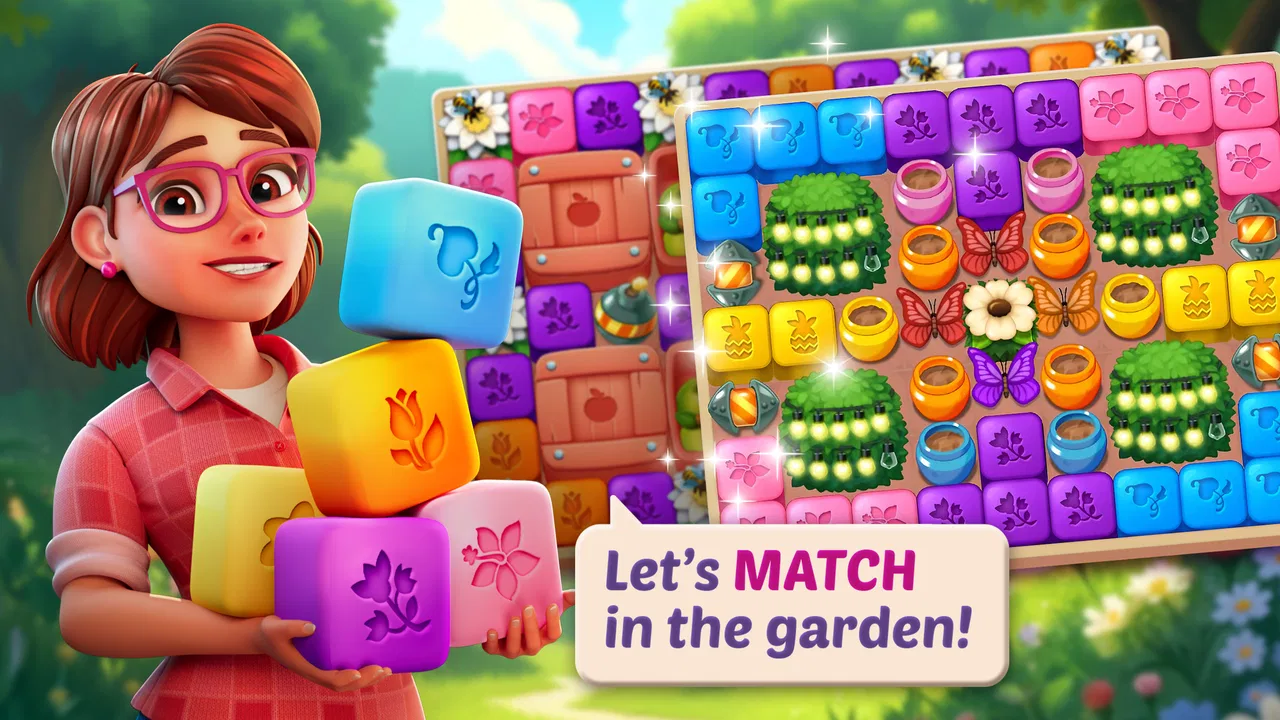
Lily’s Garden is the kind of puzzle game I can open with no preparation, play for a few minutes, and put down without feeling that I have abandoned a complicated task. Its appeal comes from the combination of match-style puzzles, a gradually changing garden, mansion renovation, and a story built around Lily and the people around her. I found the first moments easy to understand: complete a puzzle, earn progress, spend that progress on a visible improvement, then see the story move forward.
That simple loop matters more than it sounds. Many mobile puzzle games make me wait through several menus before I reach the actual board, while others bury the relaxing part under constant pressure. Here, the garden gives each successful level a purpose, and the short challenges make the game suitable for small gaps in the day. It is free to start, rated for Everyone, and developed by Tactile Games, so it is clearly aimed at a broad casual audience rather than dedicated puzzle specialists.
Why the first few sessions feel so accessible
The main puzzle format is familiar enough that I did not need a tutorial-heavy introduction. Pieces are matched to clear objectives, and the game gradually adds new obstacles and goals instead of presenting every rule at once. That gentle learning curve makes it comfortable for someone who enjoys casual mobile games but does not usually spend time studying complex mechanics.
You May Also Like

 Blood Strike: 2.5 Anniversary
Blood Strike’s Loadouts Turn Every Drop Into a Tactical Gamble
A close look at Blood Strike’s custom loadouts: how fast access to signature weapons reshapes its battle royale rhythm, rewards preparation, and narrows the gap between fights.

 Pandora - Music & Podcasts
Pandora’s Music Is Easy to Start, but Harder to Recover
Pandora’s strength is its low-effort path from a seed to a station. Its weak spot is how much confidence it asks you to place in connection, setup, and quiet recovery.

 8 Ball Pool
 Is Built on Rivalries, Rematches, and Routine
A close look at the rivalries, rematches, shared routines, and unanswered safety questions that turn a quick pool match into a persistent mobile community.

 Samsung Music
’s Quiet Strength Is Playing What You Already Own
Its reach comes less from spectacle than from dependable access to a personal library. That simplicity is both the app’s strongest retention engine and its ceiling.

 AccuWeather: Weather Radar
AccuWeather Review: A Quick, Clear Forecast for Everyday Decisions
For everyday plans, the best forecast is the one you can understand quickly. AccuWeather makes rain timing, radar, and local conditions easy to act on, with a few trade-offs.

 Hill Climb Racing
Why Hill Climb Racing Still Turns Crashes Into One More Run
A tiny car, a bumpy hill and one more upgrade: Hill Climb Racing keeps resurfacing because its simple chaos makes every near-miss feel personal.
More From Our News Desk
View All News


The garden and mansion work as a useful visual reward system. I am not simply collecting an abstract score; I am working toward a place that becomes more attractive and more personal as I make decisions. Renovation tasks give the puzzle board a sense of direction, while the story prevents the landscaping from feeling like a disconnected decoration screen.
The presentation also supports the relaxed tone. Bright colors, friendly characters, and small pieces of dialogue make the game feel lighter than a purely competitive puzzle app. I would not describe every level as effortless, because later boards can require careful planning, but the overall mood is welcoming. The game wants me to keep making small steps rather than prove that I am the fastest or most technically skilled player.
One practical strength is that the objective is usually easy to identify before I make the first move. I can quickly see whether a level asks me to clear certain pieces, break through a blockage, or reach another board-specific target. That clarity helps when I only have a short break. I do not need to remember a complicated long-term strategy to enjoy one individual round.
A good fit for short, interrupted play
My favorite way to play is in brief sessions: while waiting for an appointment, during a commute when I am not driving, or at the end of the evening when I want something more active than watching a video but less demanding than a full game. A single level can feel like a complete little activity. If I get interrupted, the game is not difficult to understand when I return because the current objective remains visible and the board state is easy to read.
This is where the design succeeds particularly well. The garden gives me a reason to continue, but the game does not require me to set aside a long uninterrupted block of time. I can finish a puzzle, make one renovation choice, read a short story exchange, and stop. That rhythm feels more natural than games that expect me to remain connected to a long mission or remember a large inventory of temporary abilities.
There is still some friction. The broader progression can involve waiting for the next task, spending earned resources, or reaching a point where the next puzzle is more demanding than the previous one. The experience remains approachable, but it is not completely free of pacing pressure. If I want a game that gives me unlimited, uninterrupted access to every board, this may feel less comfortable than a paid puzzle collection.
How it handles pauses and returning later
A casual game earns my trust when it is easy to leave. Lily’s Garden generally works well in that respect because the central loop is made of separate puzzles rather than one long continuous challenge. I can close the app after a completed level and return later with a clear sense of what I was doing. The story and renovation elements also provide a gentle reminder of the next goal without forcing me to reconstruct a complicated plan.
This makes it useful for people who play in unpredictable bursts. Parents, commuters, and anyone who frequently gets interrupted may appreciate that a failed attempt does not erase the larger garden project. Even when I lose a level, the setback is local: I can try again rather than restart an entire chapter or rebuild a long chain of progress.
My advice is to treat each session as a small appointment with the game rather than trying to rush through the story. The experience feels better when I complete a puzzle, inspect the available garden or mansion change, and stop naturally. Playing too aggressively can make the progression feel like a checklist, while a slower rhythm preserves the relaxing quality that first makes the game attractive.
The free-to-play structure is worth considering before downloading. The game costs nothing to begin, but in-app purchases range from $0.99 to $99.99 for an item. I did not find spending necessary to understand the basic appeal, yet players who dislike any temptation to buy extra help, resources, or progression should approach carefully. The most comfortable experience comes from deciding in advance whether I am willing to wait or replay rather than treating every obstacle as a reason to pay.
Where the puzzle design rewards patience
The most useful skill is not simply matching quickly. I get better results when I look at the entire board before making an obvious move. A match that clears a nearby target may be less valuable than one that creates space for a larger combination. Because the objectives vary, the best first move is not always the one that removes the most pieces immediately.
I also learned to avoid spending helpful effects too early when the board has not yet opened up. A powerful combination can solve a visible problem, but saving it for a crowded section often creates a much better chain. This is a small but important difference between casually tapping at matches and actually reading the board. The game remains accessible, but it gives attentive players room to improve their decisions.
When a level becomes frustrating, I prefer to pause for a moment instead of repeating the same opening. Looking for moves that affect several objectives at once is usually more productive than chasing the nearest target. That habit makes the difficulty feel fairer, even when luck influences the pieces that appear. It also gives the puzzle a little more replay value than the bright, simple presentation might suggest at first.
Still, the replay value has a clear limit. I do not return to completed levels in the same way I would revisit a deep strategy game or a competitive puzzle with endless score chasing. My motivation comes mainly from new boards, the next renovation decision, and the continuing story. Once I have seen a level and completed its objective, the reason to replay it is usually practical rather than exploratory.
The story and renovation layer
The narrative is not just decoration around the puzzles. It gives context to the garden work and makes the renovation choices feel connected to Lily’s situation. I enjoyed having a character-focused reason to continue, especially during sessions when I wanted something warm and low-pressure rather than a purely mechanical challenge.
At the same time, readers should know what kind of story experience to expect. This is a casual mobile narrative delivered in small portions, not a long-form adventure with extensive control over every outcome. The dialogue helps maintain momentum between puzzles, but players who want a large branching story or a detailed simulation of gardening may find the layer too light.
The renovation aspect is strongest when I use it as a reward rather than as a serious design tool. Choosing improvements makes progress visible, but it does not replace a full decorating simulator. I cannot approach the garden with the same level of freedom I would expect from a dedicated building or interior-design game. That limitation is acceptable because the puzzle remains the main activity, but it is important for anyone downloading specifically for creative construction.
One subtle benefit is that the visual changes help me remember why I am progressing. In a conventional match game, completing another level can feel interchangeable with the last one. Here, the garden and mansion provide a growing record of those small victories. Even when the puzzle itself is familiar, the surrounding project gives the session a little emotional continuity.
What becomes repetitive over time
The same structure that makes the game easy to pick up can also make it predictable. The basic pattern of solve, collect progress, improve the property, and continue the story remains central for a long time. New obstacles and objectives can refresh the board, but they do not completely change what I am doing.
I noticed the repetition most when I played for a long stretch. The relaxed mood became less noticeable, and I started focusing on how many similar levels stood between me and the next meaningful story moment. For short sessions, that repetition is usually harmless. For extended play, it can make the game feel like a steady stream of familiar tasks rather than a series of surprising discoveries.
This is why I would not recommend it as the only game on a phone for someone who needs constant novelty. It works better alongside something with a different pace, such as a narrative adventure, a word game, or a more demanding strategy title. Lily’s Garden is at its best when I use it as a dependable comfort game, not when I expect it to provide endless mechanical reinvention.
Another trade-off is the balance between relaxation and progression pressure. The puzzles themselves can be calming, but the desire to reach the next renovation or story beat may encourage repeated attempts. If I am patient, the game stays pleasant. If I feel compelled to advance immediately, the same systems can become a source of irritation. That difference depends as much on my playing habits as on the board design.
Performance, audience, and practical expectations
The game supports devices running Android 6.0 or later, which makes it accessible on a wide range of phones and tablets. Its broad audience is reflected in the Everyone content rating. I would still suggest checking how comfortable the interface feels on an older or smaller device, since puzzle boards and decorative scenes are easier to enjoy when the screen is clear and responsive.
Its popularity is substantial: it has passed 50 million installs, with an average rating of 4.6 from around 1.5 million ratings and roughly 135 thousand written reviews. Those figures do not guarantee that every player will enjoy the pacing, but they do match my impression that the game has a wide casual appeal rather than serving a narrow puzzle niche.
The current version is 3.54.0, and the game has been available since February 4, 2019. That long presence helps explain why the experience feels established, with a recognizable identity built around its characters, property improvements, and repeatable puzzle rhythm. I would choose it over a brand-new match game if I wanted a familiar style with a substantial existing progression path.
On the other hand, I would skip it if my priority were completely offline, purchase-once play, deep competitive scoring, or unrestricted decoration. I would also be cautious if I know that limited moves and optional purchases make me impatient. A traditional paid puzzle game may be a better match for someone who wants fixed content without free-to-play pacing, while a dedicated decorating game will offer more control over visual design.
My everyday way of using it
In a normal evening, I might open the game intending to play only one level. I check the objective, scan for a move that can create space, and try not to waste a useful combination on the first easy target. After finishing, I spend the earned progress on the next garden or mansion improvement, read the short story segment, and stop before the repetition becomes noticeable. That sequence gives me a satisfying endpoint without demanding a long commitment.
For a longer session, I change my approach. I take breaks after a few boards, especially if I have failed the same level more than once. The pause helps because frustration can make me choose fast, obvious matches rather than thoughtful ones. Returning later often feels better than forcing a solution while annoyed, and the game’s short-board format makes that easy.
Families may find the Everyone rating reassuring, but younger players may still need guidance around in-app purchases. The colorful style is inviting, and the rules are straightforward, yet the free entry and optional spending can make the game appealing beyond the puzzle itself. I would let a child play independently only with the device’s purchase settings handled appropriately.
My casual verdict
Lily’s Garden is a strong choice when I want a friendly puzzle game that respects short sessions, gives each level a visible purpose, and lets me return after interruptions without much mental effort. The garden and mansion progression add personality to a familiar match format, while the story gives the repeated boards a reason to matter.
Its weaknesses are just as clear. The core loop can become repetitive during long sessions, the renovation is not as flexible as a dedicated design game, and the free-to-play structure may not suit players who want a completely frictionless experience. The later appeal depends heavily on whether I enjoy gradual progress more than constant mechanical surprise.
My recommendation is simple: try it if you like relaxed match puzzles, gentle character stories, and visible home improvement in small daily doses. Keep your sessions short, think ahead instead of rushing matches, and decide before playing how you want to handle optional purchases. If that rhythm sounds enjoyable, the game has enough charm to become a reliable little break in your day. If you want deep strategy, unlimited creative control, or a one-time purchase with no progression pressure, another puzzle style will serve you better.
FAQs for Lily’s Garden - Design & Relax
01What is the main objective of Lily's Garden?
Lily's Garden is a match-3 puzzle game combined with a garden design element. The primary objective is to help the protagonist, Lily, renovate her aunt’s garden by solving puzzles. As you progress, you'll unlock new sections of the garden, add decorations, and advance the storyline, making it a mix of strategic gameplay and engaging narrative.
02Is Lily's Garden free to play, and are there in-app purchases?
Yes, Lily's Garden is free to download and play. However, it offers in-app purchases for various items that can enhance gameplay, such as additional moves, lives, or special boosters. These purchases are optional but can help accelerate progress or overcome challenging levels.
03Does Lily's Garden require an internet connection?
An internet connection is recommended for playing Lily's Garden as it allows you to access all features, updates, and events. While some sections of the game may be playable offline, the full experience, including social interactions and progress syncing, requires connectivity.
04What age group is Lily's Garden suitable for?
Lily's Garden is suitable for players aged 12 and above due to its mild cartoon violence and strategic gameplay elements. The game’s storyline and design aspects are crafted to appeal to both teenagers and adults, offering a relaxing yet engaging experience.
05How often are new levels and content added to Lily's Garden?
The developers of Lily's Garden regularly update the game with new levels and content. This includes seasonal events, storyline expansions, and fresh design elements to keep the gameplay dynamic and exciting. Players can expect frequent updates to maintain engagement and interest.
Pros
- Engaging storyline with charming characters.
- Beautiful graphics and relaxing gameplay.
- Frequent updates with new events.
- Challenging puzzles that boost creativity.
- No forced ads interrupting play.
Cons
- In-app purchases can be pricey.
- Requires internet to access certain features.
- Progress can be slow without spending.
- Some levels are overly difficult.
- Limited customization options for gardens.

Lily’s Garden - Design & Relax
Gallery